Football Live Scores
How VAR Has Changed Football: A Complete History of Video Refereeing in Soccer
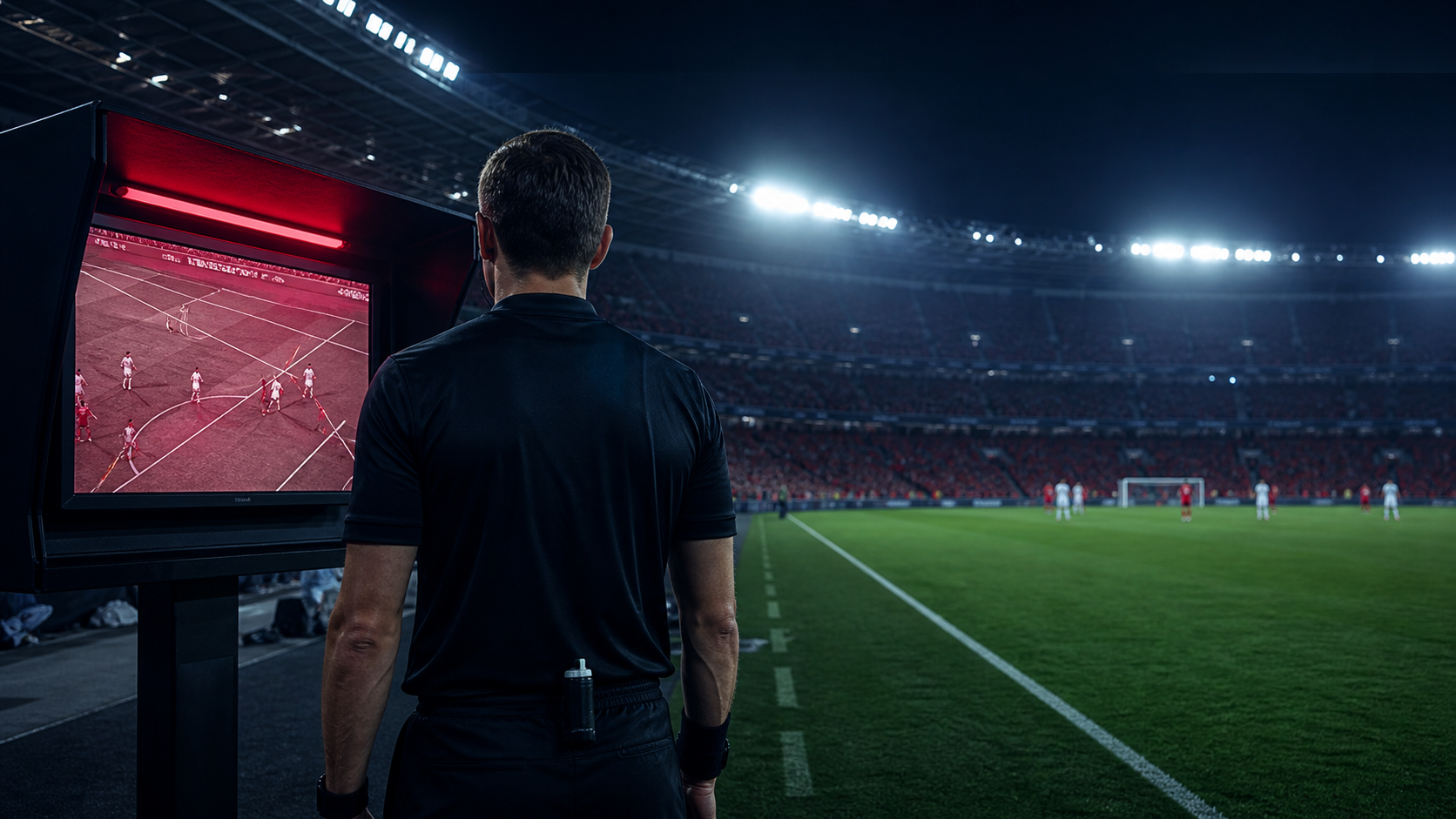
It was the 96th minute at Anfield. Luis Díaz slid the ball into the net, the crowd erupted — and then silence. The flag went up, VAR intervened, and the goal was ruled out. The problem? Díaz was clearly onside. The VAR official had made a catastrophic error, Liverpool lost 2-1, and the most powerful refereeing tool in football's history had once again become its most controversial subject.
Few innovations in the modern game have provoked as much debate as the Video Assistant Referee. Loved by those who want decisions to be correct. Loathed by those who miss the spontaneous joy of a goal celebration. Understanding the full VAR history in football means understanding a decade of politics, technology, blunders, and genuine progress — all of which continues to reshape the sport we love.
Stay up to date with every fixture and result on Live Football Scores as you read through this definitive guide.
The Idea: Where Did VAR Come From?
The "Refereeing 2.0" Project
VAR did not emerge overnight. Its roots trace back to the early 2010s and a visionary project run by the Royal Netherlands Football Association (KNVB), called "Refereeing 2.0." The KNVB believed that technology could help referees eliminate clear errors without disrupting the flow of the game — a fine line that the sport is still trying to walk today.
The concept was put through its paces during mock trials in the 2012–13 Eredivisie season, where the technology was tested in controlled environments before any live match application. The results were promising. But there was a significant obstacle: FIFA.
Sepp Blatter's Resistance
FIFA president Sepp Blatter was a consistent opponent of video review throughout his presidency. Despite growing pressure from clubs, federations, and the wider football community, Blatter blocked proposals to introduce video technology at the top level of the game. His reasoning varied, but he consistently argued that human error was part of the fabric of football — that debate and controversy were essential ingredients in the sport's appeal.
The irony of that position would not be lost on future fans sitting in stadiums with no idea why a goal had just been ruled out. But in the Blatter era, the politics of football worked against VAR at every turn.
That all changed in 2015, when Blatter resigned from the FIFA presidency amid a sweeping corruption scandal. His successor, Gianni Infantino, took a dramatically different view. Infantino welcomed technological innovation, opening the door for VAR to finally move from concept to reality. For the KNVB and those who had spent years developing the system, it was the opening they had been waiting for.
The system itself was created by Hawk-Eye Innovations Limited, the same company behind ball-tracking technology in cricket and tennis — sports that had already embraced video review with broadly positive results. Football, the world's most watched sport, was finally ready to follow.
The First Experiments (2016)
A Friendly, Then the Real Thing
The first steps were cautious. In July 2016, VAR was used for the very first time in a live match — a pre-season friendly between PSV and FC Eindhoven in the Netherlands. It was a controlled test, but an important proof of concept.
The following month, in August 2016, VAR made its competitive debut in four MLS reserve-side matches in the United States. Referee Ismail Elfath made history by becoming the first official to review footage via VAR in a competitive context — consulting the system on two separate fouls, issuing both a red card and a yellow card as a result.
The First Professional Game
The real milestone came on September 21, 2016, when a KNVB Cup tie between Ajax and Willem II became the first professional, non-friendly match to feature VAR. This game was also the first to include a pitchside monitor — the Referee Review Area (RRA) — allowing the referee to leave the field and watch footage directly.
During that match, a yellow card was reviewed and upgraded to a red card, making it the first ever VAR-based expulsion in professional football. The learning from these early trials was clear: decisions needed to be communicated better — to players, to fans in the stadium, and to TV audiences at home.
Going Live: League by League Rollout (2017–2018)
Australia Leads the Way
The honour of being the first top-flight professional league to formally adopt VAR belongs not to England, Germany, or Spain — but to Australia. On April 7, 2017, the A-League became the first competition to use VAR in regular league play, in a match between Melbourne City and Adelaide United.
The very next day — April 8, 2017 — came the first VAR intervention in a professional league: a handball penalty was awarded in the match between Wellington Phoenix and Sydney FC. The technology had officially entered the game.
Europe Follows
The United States' MLS also introduced VAR during the 2017 season. Then came the two continental heavyweights: both the Bundesliga (Germany) and Serie A (Italy) adopted VAR for the 2017–18 season, becoming the first top-flight European leagues to do so.
On the international stage, FIFA's 2017 Confederations Cup was the first major international tournament to use VAR — a significant trial run ahead of the World Cup. The 2017 FIFA U-20 World Cup followed in November 2017.
England's first taste of VAR came on January 8, 2018, in an FA Cup third-round tie between Brighton and Crystal Palace. The reaction was mixed but intrigued. La Liga in Spain then joined the fold for the 2018–19 season, completing VAR's adoption across Europe's top five leagues.
VAR at the World Cup 2018: The Global Debut
Russia 2018 — The Biggest Stage Yet
If there was one moment that announced VAR to the entire football world, it was the 2018 FIFA World Cup in Russia. This was the first World Cup to use VAR — and with billions of viewers watching, every decision was scrutinized.
Crucially, on March 3, 2018, the International Football Association Board (IFAB) had officially written VAR into the Laws of the Game, giving the technology formal legal status in the sport for the first time.
At Russia 2018, VAR was deployed to check four types of incidents: goals (and any offenses in the build-up), penalty decisions, direct red card incidents, and mistaken identity. Across the tournament, there were over 335 VAR checks and 20 decisions were overturned.
The Final Controversy
France won the tournament, defeating Croatia in an entertaining final. Two of France's four goals came via VAR-awarded penalties — a fact that delighted the French and infuriated the Croatians. Antoine Griezmann's second-half penalty, awarded after a VAR review for handball, was the most debated moment in a tournament full of them.
The reception across football was decidedly mixed: some praised the technology's accuracy, others criticised the delays, the interruptions to celebrations, and the still-imperfect application of the rules. Supporters who had queued for hours to be inside a stadium found themselves waiting in baffled silence while officials in a room hundreds of kilometres away determined whether a goal stood. It was a legitimate problem — and one the game is still working to solve.
VAR had gone global. There was no going back.
VAR Comes to the Premier League (2019)
The Vote and the Wait
Despite England's early FA Cup trials, the Premier League was slower than most to commit to full adoption. In November 2018, all 20 Premier League clubs voted unanimously to introduce VAR — a rare moment of consensus in English football. Testing continued during the 2018–19 season through the FA Cup and EFL Cup.
Finally, for the 2019–20 season, VAR was officially part of Premier League football.
The First Decision — and Instant Drama
The first Premier League VAR decision arrived in the very first weekend: Manchester City vs Tottenham in August 2019. VAR disallowed a Gabriel Jesus goal for a foul in the build-up. The debate began immediately.
Within weeks, English football was engulfed in conversation about millimeter-thin offside lines — computerised images drawn across the screen to determine whether a player's armpit or big toe was fractionally ahead of the last defender. Goals were disallowed for margins invisible to the human eye. Celebration had become conditional.
In response, semi-automated offside technology (SAOT) was introduced for the 2022–23 season, using player skeleton tracking and limb-position data from multiple cameras to deliver decisions in around 25 seconds — far faster than the manual line-drawing process that had caused such frustration.
Follow all the latest Premier League action and results on Live Football Scores.
How VAR Actually Works
The VAR Room
Behind every review is a team of officials working in a dedicated VAR room, typically staffed by 3–4 video assistant referees watching footage from multiple camera angles simultaneously. They monitor every significant moment in the match in real time.
There are four reviewable situations:
- Goals and pre-goal offenses — including offside and fouls in the build-up
- Penalty decisions — whether a foul occurred inside the box
- Direct red card incidents — violent conduct, serious foul play
- Mistaken identity — when a card is shown to the wrong player
Two Pathways to Review
Reviews happen in one of two ways. In a VAR-initiated review, the VAR official spots a potential error and contacts the on-field referee directly. In a referee-initiated review, the referee themselves requests a check after feeling uncertain about a decision.
The referee may then proceed to the Referee Review Area (RRA) — the pitchside monitor — to watch the footage themselves before making a final call.
The "Clear and Obvious Error" Standard
This is the most important concept in understanding VAR: the system is not designed to find the perfect decision. VAR can only overturn an on-field call if it was a "clear and obvious error" — meaning the original decision was demonstrably wrong, not merely debatable. This threshold is frequently misunderstood by fans and pundits alike.
Semi-Automated Offside (SAOT)
The most sophisticated component of modern VAR is semi-automated offside technology. SAOT uses player skeleton tracking — mapping up to 29 points on each player's body — combined with data from multiple cameras and precise limb-position information. The result is an offside decision delivered in approximately 25 seconds, with a three-dimensional model displayed on broadcast screens to illustrate the call.
The Biggest VAR Controversies in History
VAR has delivered accuracy improvements across the game. It has also delivered some of the most maddening moments in football history. Here are five of the worst:
Luis Díaz onside goal ruled out — Spurs 2–1 Liverpool, October 2023. VAR official Darren England miscommunicated with referee Simon Hooper, resulting in a clearly onside Díaz goal being incorrectly ruled out. Liverpool lost the match 2–1. PGMOL issued a rare public apology, and England was stood down. This incident triggered a renewed debate about accountability in VAR officiating.
Ivan Toney offside miss — Arsenal 1–1 Brentford, February 2023. VAR official Stuart Attwell failed to draw the required offside lines for Toney's equalizer, allowing a goal that replays suggested was offside to stand. Arsenal dropped crucial title points in what would prove a pivotal moment in the 2022–23 season. Attwell stepped down from VAR duties days later.
Virgil van Dijk injury — Everton vs Liverpool, October 2020. Jordan Pickford's reckless challenge on van Dijk went unpunished because the flag had been raised for offside — and VAR rules at the time prevented the foul from being reviewed. Van Dijk suffered a torn ACL, missed the rest of the season, and Liverpool's title defence collapsed. The rules have since been revised.
Penalty for "supporting body weight" — Portugal vs Uruguay, World Cup 2022. A penalty was awarded against Uruguay for a handball deemed to be "supporting body weight." The decision contradicted official guidance issued just months earlier on exactly this type of incident, leaving fans and pundits confused about what the rules actually said.
Griezmann goal disallowed — Tunisia 1–0 France, World Cup 2022. Antoine Griezmann's 98th-minute equalizer for France was ruled out — incorrectly — leaving Tunisia with a famous victory and France with a bitter feeling about a system that was supposed to eliminate these exact mistakes.
VAR by the Numbers
The data tells a story of gradual — if inconsistent — improvement, with significant variation across leagues and seasons.
| League / Competition | Season | Key Metric |
|---|---|---|
| Premier League | 2022–23 | 23 VAR errors (KMI Panel, at same point in season) |
| Premier League | 2024–25 | 18 VAR errors total — down 42% from 31 previous season |
| Premier League | 2025–26 | 13 errors (same point as prev. season's 10) — up 30%, but below 2022–23 |
| Premier League | 2024–25 | 109 VAR interventions — fewest in first five seasons |
| Serie A | 2024–25 | 92% VAR accuracy rate |
| Serie A | 2025–26 | 84% accuracy in first 11 rounds |
| Australia A-League | 2024–25 | 98.8% of VAR decisions correct |
| World Cup 2018 | Russia | 335+ VAR checks; 20 decisions overturned |
The Australia A-League figure stands out: 98.8% accuracy suggests that full VAR adoption, when implemented carefully and consistently, can deliver near-flawless outcomes. The Premier League's continuing struggles with error rates — and their volatility season to season — reflect the ongoing difficulty of applying technology in one of the most pressurised and scrutinised leagues in the world.
What's Next for VAR? (2025 and Beyond)
In-Stadium Announcements
One of the most persistent criticisms of VAR was that fans inside stadiums were left in the dark. That has changed. From the start of the 2025–26 Premier League season, in-stadium announcements explaining VAR decisions became mandatory — following the model first trialled at the 2023 FIFA Women's World Cup, where referees announced decisions live to the crowd for the first time.
Expanded Review Powers
The International Football Association Board (IFAB) has adopted new rules for 2026–27 (being implemented early at the 2026 FIFA World Cup) that significantly expand what VAR can review. For the first time, VAR will be able to assess:
- Second yellow cards (which can now be reviewed before a player is sent off)
- Incorrectly awarded corner kicks
- Cards shown to the wrong player (mistaken identity)
Referee Body Cameras
At the 2025 FIFA Club World Cup, referee body cameras were trialled for the first time. The cameras offer new angles on incidents and could, in future, provide both VAR officials and viewers with the referee's direct perspective during key moments. Whether this becomes permanent is still under review.
The direction of travel is clear: more transparency, more accuracy, and more accountability. VAR in 2025 and beyond is not the same system that confused everyone at Russia 2018 — but it's still a work in progress.
For all the live action and scores as VAR decisions continue to shape results, bookmark Live Football Scores.
FAQ: VAR History Football — Your Questions Answered
Q1: When was VAR introduced in football?
VAR was first used in a live match in July 2016, in a friendly between PSV and FC Eindhoven in the Netherlands. The first competitive use in a professional non-friendly match came on September 21, 2016, in the KNVB Cup tie between Ajax and Willem II. The first full league to adopt VAR was the Australian A-League in April 2017.
Q2: How does VAR work in football?
A team of 3–4 video assistant referees monitors the match from a dedicated VAR room, reviewing footage from multiple camera angles. They can only intervene in four situations: goals (including pre-goal offenses), penalty decisions, direct red card incidents, and mistaken identity. The VAR can either alert the on-field referee to a potential error, or the referee can request a review. A decision is only overturned if it was a "clear and obvious error" — not merely a debatable one.
Q3: What was the first FIFA World Cup to use VAR?
The 2018 FIFA World Cup in Russia was the first World Cup to use VAR. IFAB officially incorporated VAR into the Laws of the Game on March 3, 2018, shortly before the tournament began. Over 335 VAR checks were made during the competition, resulting in 20 overturned decisions.
Q4: When did the Premier League introduce VAR?
The Premier League introduced VAR for the 2019–20 season, following a unanimous vote by all 20 clubs in November 2018. The first VAR decision came in the opening weekend: a Gabriel Jesus goal for Manchester City against Tottenham was disallowed for a foul in the build-up.
Q5: What are the biggest VAR controversies in football history?
The most notorious VAR failures include: Luis Díaz's onside goal ruled out against Spurs in 2023 (PGMOL apologised); Stuart Attwell failing to draw offside lines for Ivan Toney's equalizer in Arsenal vs Brentford in 2023; VAR failing to penalise Jordan Pickford's challenge on Virgil van Dijk in 2020 (van Dijk suffered a season-ending ACL injury); a World Cup 2022 penalty awarded for a handball contradicting official guidance; and Antoine Griezmann's valid equalizer being incorrectly disallowed against Tunisia at the same tournament.
Conclusion: VAR History Football — The Verdict
The VAR history in football is the story of an idea that was right in principle, rushed in places, and consistently hampered by human error at the very moment it was supposed to eliminate it. From the KNVB's early "Refereeing 2.0" experiments to the shockwaves of Russia 2018, from the Premier League's immediate controversies to the 98.8% accuracy rates in Australia — VAR has changed the game irrevocably.
The technology will keep evolving. The controversies almost certainly will too. But the direction is toward more transparency, more accountability, and ultimately more correct decisions — even if the path there has been anything but smooth.
The debate about VAR will never fully end, because football is emotional and decisions matter. A goal is not just a goal — it is the reason millions of people drag themselves to grounds in the rain, the moment a season is saved or destroyed, the memory that lasts a lifetime. When VAR gets it wrong, the pain is amplified by the promise that it was supposed to get it right.
What we can say with confidence is that the game's officials, administrators, and technologists are working harder than ever to improve. The error rates are generally trending down. The communication is getting better. And the conversations VAR has forced — about consistency, accountability, and what refereeing should look like in the modern era — have made football more honest with itself, even when they've made it more frustrating to watch.
Never miss a moment. Stay on top of every match, result, and big decision — track all the live action at Live Football Scores. Whether VAR gives your side a goal or takes one away, you'll know about it the moment it happens.