Football Live Scores
FIFA & IFAB New Rules 2025/26 Explained: Everything Players and Fans Need to Know
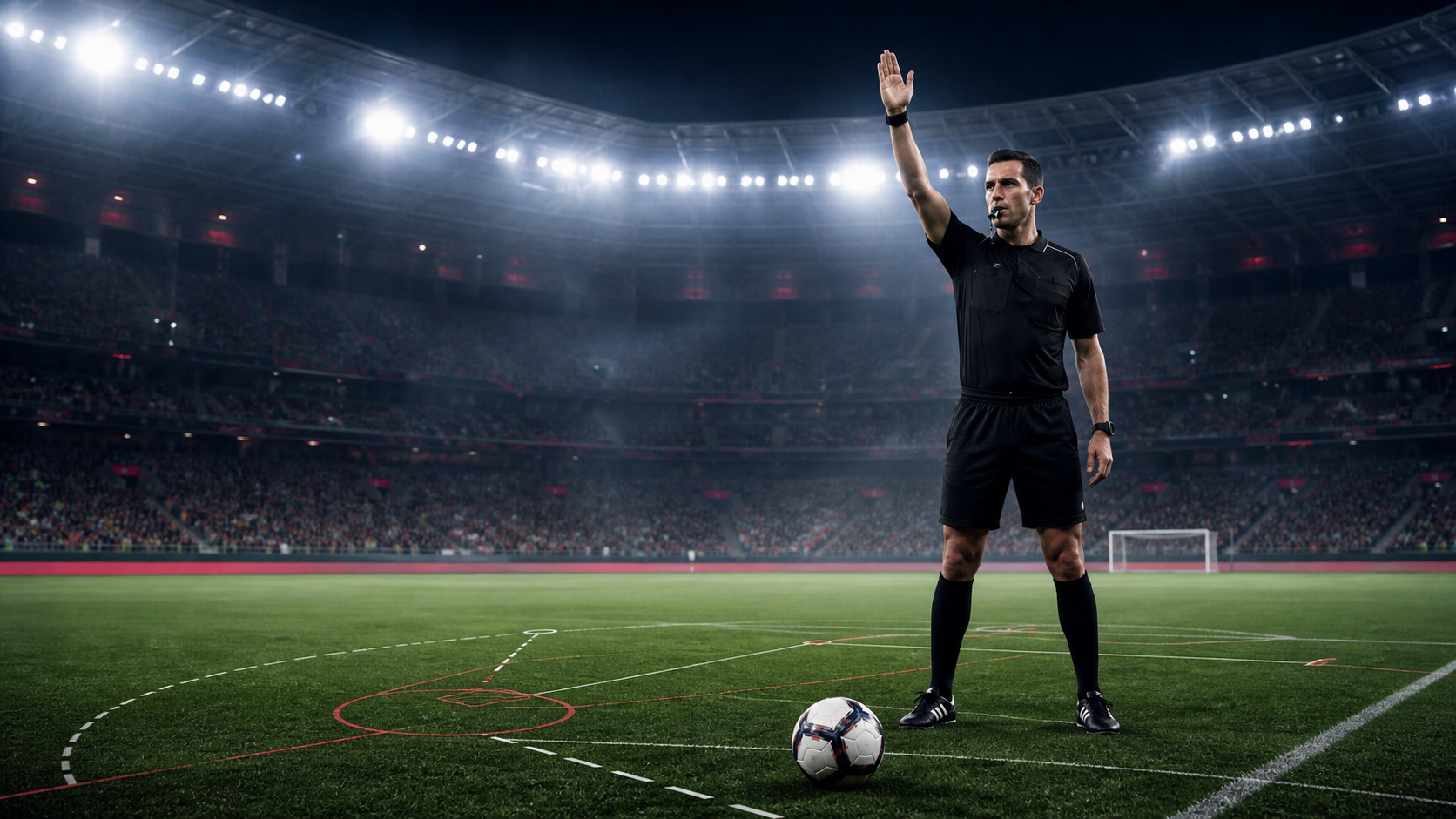
Football is a sport built on tradition — but it is not afraid to evolve. The 2025/26 season brought a wave of significant law changes that are already reshaping how matches are played, refereed, and experienced. Some of these changes are already in full effect. Others are set to arrive at the biggest stage in football: the FIFA World Cup 2026.
Whether you are a player trying to understand what your goalkeeper can and cannot do, a coach adjusting tactics, or a fan watching closely from the stands, these FIFA new rules 2025/26 affect you. This guide breaks down every key change — what it is, why it was introduced, and what it means in practice.
Why Does IFAB Change the Laws of Football?
Before diving into the specific rules, it helps to understand who is actually making these changes and why.
The International Football Association Board (IFAB) is the body responsible for the Laws of the Game. Founded in 1886, IFAB is a joint body made up of FIFA and the four British football associations (England, Scotland, Wales, and Northern Ireland). Any permanent change to football's laws must be approved by IFAB.
IFAB meets annually to review proposed changes. These changes typically aim to:
- Speed up the game and reduce time-wasting
- Increase fairness by closing loopholes
- Improve player welfare and safety
- Leverage technology like VAR more effectively
- Clarify ambiguities that cause inconsistent refereeing
The 2025/26 cycle of IFAB law changes 2025 is one of the most comprehensive in recent years, touching on goalkeeping, restarts, substitutions, VAR protocols, and even referee technology. Here is everything you need to know.
2025/26 Changes: Already in Effect (From July 1, 2025)
These four changes came into force at the start of the 2025/26 season. If you have been watching matches closely, you may have already spotted some of them in action.
1. The Goalkeeper 8-Second Rule (Law 12.2)
This is the change that has generated the most discussion among fans and players alike — and for good reason.
What changed: Goalkeepers must now release the ball within 8 seconds of gaining control with their hands. Previously, the rule allowed 6 seconds, but it was rarely enforced. The new rule comes with a proper visual mechanism to make enforcement consistent.
How it works in practice: Once a goalkeeper has held the ball for 3 seconds, the referee (or assistant referee) begins a visible 5-second countdown using their hand — one finger at a time. If the goalkeeper still has not released the ball when the countdown ends, the penalty is a corner kick awarded to the opposing team.
This is a significant upgrade from the old rule, where the punishment was an indirect free kick. A corner kick is a far more threatening outcome, giving the change genuine teeth.
First high-profile application: The Premier League provided the first notable example almost immediately. On August 16, 2025, Burnley goalkeeper Martin Dúbravka became the first player penalised under the new rule in a Premier League match against Tottenham Hotspur. The corner kick awarded to Spurs underscored just how seriously referees are enforcing it.
Why it matters: For decades, goalkeepers have used possession time as a delay tactic, especially when protecting a lead. This rule directly targets that behavior. Expect goalkeeping coaches at every level to start timing distribution and adjusting game plans accordingly.
2. Dropped Ball Rule Clarification (Law 8.2)
The dropped ball has always been one of football's more confusing restarts. The updated rule brings welcome clarity.
What changed: When play is stopped and the ball is dropped by the referee, it goes to:
- The team that had possession or was clearly going to gain possession — if that was obvious to the referee at the moment play stopped
- The team that last touched the ball — if possession was not clear
The ball is dropped at the exact position where play was stopped, not moved to a nearby spot.
Why it matters: This eliminates confusion about which team receives the dropped ball and removes any ambiguity around positioning. Referees now have a clear, consistent framework to apply every time.
3. VAR Protocol Update: Public Announcements
One of the biggest frustrations for fans watching in stadiums has been the silence and confusion during VAR reviews. The updated protocol addresses this directly.
What changed: Competitions now have the option to allow the on-field referee to make a public announcement explaining the outcome of a VAR review — much like the announcements made by referees in rugby union.
Why it matters: This is a transparency measure. Fans in stadiums and broadcast audiences will have a clearer understanding of what was reviewed and what decision was made. It does not change outcomes, but it significantly improves the experience and trust around VAR decisions. Leagues adopting this will find it reduces frustration in the stands considerably.
4. Captain-Only Approach to Referees
Anyone who has watched players swarm the referee after a controversial decision knows how chaotic those moments can be. This change introduces structure.
What changed: Competitions can now adopt a rule where only the captain is permitted to approach the referee in specific situations — such as after a contentious decision.
Why it matters: This mirrors practices already in use in sports like rugby. It reduces confrontation, speeds up the game, and gives captains a formal leadership role that goes beyond wearing the armband. Expect to see this adopted widely across top leagues in the coming seasons.
2026/27 Changes: Coming to the FIFA World Cup 2026
The following rules are officially classified as 2026/27 season changes, effective July 1, 2026. However, in a landmark decision, FIFA has chosen to adopt them early at the FIFA World Cup 2026, meaning the world's biggest tournament will serve as the global stage for these changes.
These represent some of the most significant football rules changes 2026 in recent memory.
5. Countdown for Throw-Ins and Goal Kicks
Time-wasting at throw-ins and goal kicks is endemic at all levels of the game. This rule change takes direct aim at it.
What changed: Referees can now initiate a 5-second visual countdown if a throw-in or goal kick is being deliberately delayed.
- If a throw-in is not taken in time, possession is awarded to the opposing team
- If a goal kick is not taken in time, the restart becomes a corner kick for the opponents
Why it matters: Losing a goal kick to a corner kick is a dramatic consequence — one that will make defenders and goalkeepers think carefully before wasting time. This change alone could meaningfully reduce the amount of dead time in matches.
6. Substitution Time Limit
The rolling substitution time-waste has long been a thorn in the side of referees and fans. Players leaving the pitch slowly while a team kills the clock will no longer be tolerated.
What changed: Once the substitution board has been shown, the player being substituted has 10 seconds to leave the pitch. If they fail to do so:
- The substitute must wait 1 full minute of active play before they are allowed to enter the field
Why it matters: This creates a direct, enforceable consequence. Rather than adding time at the end of a match (which can still be eaten up), it penalises the substituting team in real time. Teams that want to make tactical substitutions will need to do so efficiently.
7. Injured Player Off Rule
Player welfare is at the heart of this change — but it also has tactical implications.
What changed: Any player whose injury causes a stoppage in play must leave the pitch and remain off the field for a minimum of 1 full minute after play resumes before they can return.
Why it matters: This closes a loophole that was frequently exploited — players feigning or exaggerating injuries to earn a stoppage, receive treatment on the pitch, and then immediately rejoin play. Under the new rule, those players will be off the pitch for at least a minute, incentivising honest reporting of injuries and improving the flow of the game.
It also has genuine welfare benefits: players with head injuries or potential concussions are not rushed back onto the pitch before they have had sufficient assessment time.
8. VAR Expansion: New Review Categories
The VAR new rules 2026 significantly expand what video review can cover. This is one of the most technically complex changes in the package.
What VAR can now review:
- Second yellow cards — VAR can review incidents to determine if a second yellow card should have been awarded. However, VAR cannot recommend a second yellow for an incident not shown on the field; it can only review and potentially upgrade or overturn what the referee assessed.
- Incorrectly awarded corner kicks — VAR can intervene for obvious errors in awarding a corner kick, but only if done immediately (not after play has restarted)
- Cards given to the wrong player — If a referee mistakenly books or sends off the wrong player, VAR can correct this
Why it matters: These additions address specific categories of error that have repeatedly caused controversy at the highest level. Mistaken identity bookings in particular have resulted in high-profile injustices, and having VAR as a backstop adds a critical layer of fairness.
9. No Yellow Card After Advantage Is Played and a Goal Scores
This rule change resolves a longstanding debate around the advantage rule and its interaction with cautions.
What changed: If a referee plays advantage following a foul that would have warranted a yellow card, and the attacking team subsequently scores a goal, the defending player who committed the foul will not receive the caution.
Why it matters: Under the previous system, players could be booked even after the referee had played advantage and the attacking side scored — meaning the attacking team was rewarded, yet the foul was still punished. This felt like double jeopardy to many observers. The new rule acknowledges that scoring a goal is itself a sufficient outcome when advantage has been played. Defenders who foul but concede a goal as a result will be spared the yellow card.
Note: if the advantage is played but no goal results, the caution can still be issued at the next stoppage.
10. Referee Body Cameras
Perhaps the most visually striking development of this cycle: referees may soon be wearing cameras.
What's happening: FIFA is actively trialing body cameras on referees. The cameras were deployed during the FIFA Club World Cup 2025 and the trial is continuing as the programme builds toward World Cup 2026.
Why it matters: This initiative serves multiple purposes. It provides a new behind-the-scenes perspective for broadcasters. It creates a detailed record of refereeing decisions that can be used for review, training, and accountability. It may also play a role in helping explain decisions to players on the pitch in real time, potentially feeding into the captain-only communication model. This is one to watch — the footage will be compelling viewing.
How These Changes Affect Players, Coaches, and Fans
For Players
Goalkeepers face the most immediate adjustment. The goalkeeper 8 second rule demands sharper decision-making and faster distribution. Players throughout the squad need to be ready to receive the ball and transition at pace — the days of the goalkeeper calmly holding the ball for 10–12 seconds while everyone repositions are over.
The injured player rule changes the calculation for players who go down on the pitch. If you leave the game with an injury stoppage, you are off for at least a minute. That will encourage players to stay on their feet where possible, and make medical staff more efficient in their assessments.
For Coaches
Tactical time-wasting strategies built around goalkeepers holding the ball, slow substitutions, and players feigning injury need to be rebuilt entirely. Coaches who have relied on these tools to kill games late on will need new approaches. The substitution time limit in particular demands rehearsed, rapid substitution protocols during training.
On the positive side, the no-yellow-after-advantage rule rewards teams that play attacking football. Coaches can have more confidence that pressing high and winning fouls in advanced areas will pay off without the drawback of accumulating cards in the opposition.
For Fans
These changes are, broadly speaking, very good news for supporters. More ball-in-play time, faster restarts, fewer delays, and more transparency around VAR decisions all improve the matchday and broadcast experience. The captain-only approach and public VAR announcements in particular address two of the most common complaints fans have had about the modern game.
Stay up to date with every match affected by these new rules by following Football Live Scores — your source for real-time results from leagues around the world.
Frequently Asked Questions
Q1: When did the FIFA new rules 2025/26 come into effect?
The 2025/26 rule changes came into effect on July 1, 2025, at the start of the new season. This includes the goalkeeper 8-second rule, the dropped ball clarification, the updated VAR announcement protocol, and the captain-only approach to referees. Some additional changes — classified as 2026/27 rules — will come into full global effect on July 1, 2026, but are being implemented early at the FIFA World Cup 2026.
Q2: What exactly is the goalkeeper 8-second rule and what happens if it is broken?
Under the goalkeeper 8-second rule (Law 12.2), a goalkeeper must release the ball within 8 seconds of gaining control with their hands. The referee waits 3 seconds, then begins a visible 5-finger countdown. If the goalkeeper still holds the ball at the end of that countdown, the opposing team is awarded a corner kick. This is a stricter punishment than the previous indirect free kick.
Q3: What are the VAR new rules for 2026?
The VAR new rules 2026 expand the scope of review to include: second yellow card incidents, obviously incorrect corner kick awards (if caught immediately), and bookings or red cards given to the wrong player. VAR can review these situations and correct them, though for second yellows, it cannot recommend a caution that the referee did not show on the field.
Q4: Will these IFAB law changes 2025 apply at the FIFA World Cup 2026?
Yes — and then some. The IFAB law changes 2025 that took effect in July 2025 are already in use across major competitions globally. The additional 2026/27 changes, including the substitution time limit, the throw-in and goal kick countdown, the injured player off rule, and the expanded VAR categories, have all been adopted early for the FIFA World Cup 2026, making the tournament a global showcase for the new era of officiating.
Q5: What happens if a substituted player takes too long to leave the pitch?
Under the new substitution time limit rule (part of the 2026/27 changes), once the substitution board is shown, the outgoing player has 10 seconds to leave the pitch. If they fail to do so within that window, the incoming substitute must wait for 1 minute of active playing time before they can enter the field. This penalises time-wasting at the point of substitution in real time.
Conclusion: A New Era for Football
The combined package of FIFA new rules 2025/26 and the upcoming football rules changes 2026 represents one of the most ambitious reform programmes in IFAB history. From the already-enforced goalkeeper 8-second rule to the sweeping VAR expansions arriving at the World Cup, these changes reflect a deliberate push toward a faster, fairer, and more transparent game.
For clubs, the message is clear: adapt now. Time-wasting tactics are being systematically closed off. Transparency around decisions is increasing. Technology is becoming a permanent part of refereeing at the top level.
For fans, this is good news — more action, fewer delays, and a better understanding of what is happening on the pitch.
Want to follow every match played under these new rules in real time? Head over to Football Live Scores for live results, scores, and updates from competitions across the globe. Whether it is the Premier League, La Liga, the Champions League, or the FIFA World Cup 2026 itself — we have got you covered.
Sources: IFAB Laws of the Game 2025/26, FIFA official communications, Premier League match reports (August 2025)